
06.10.2026


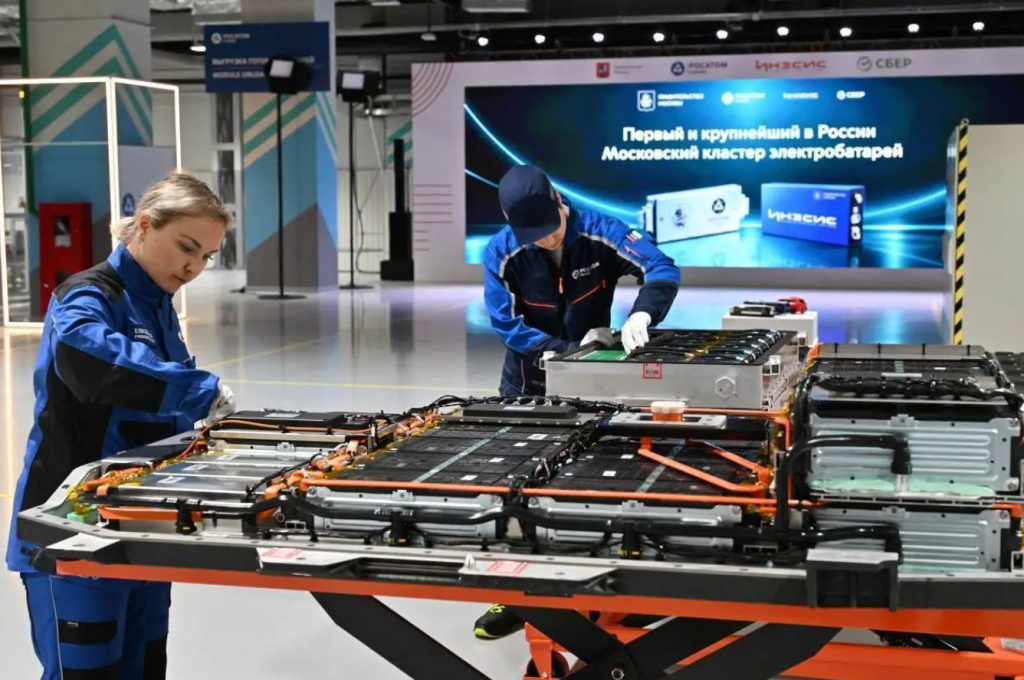
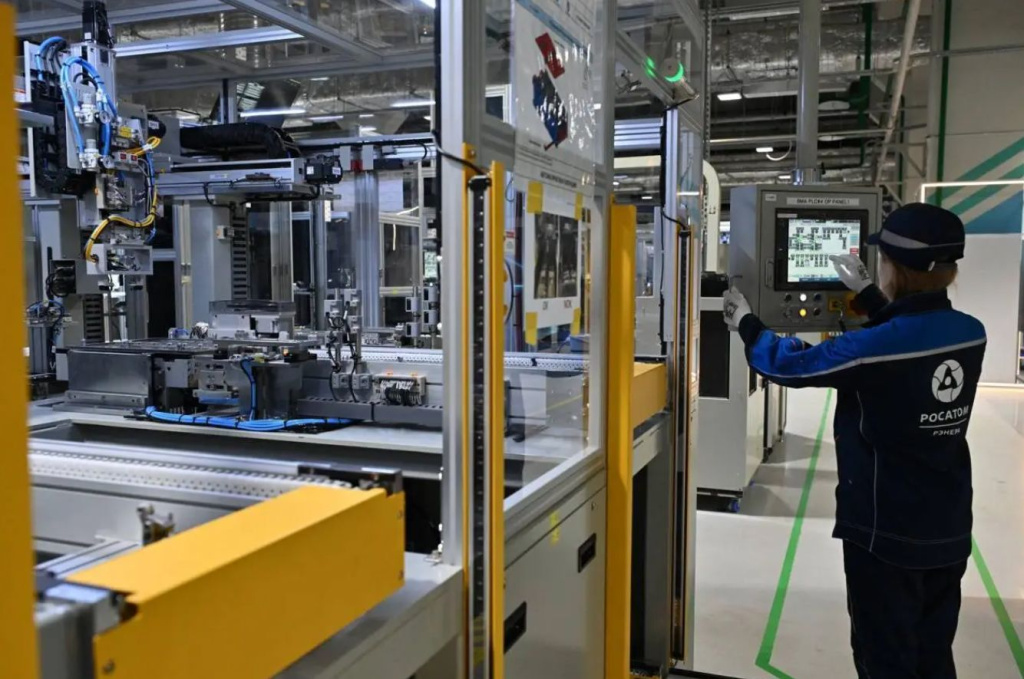
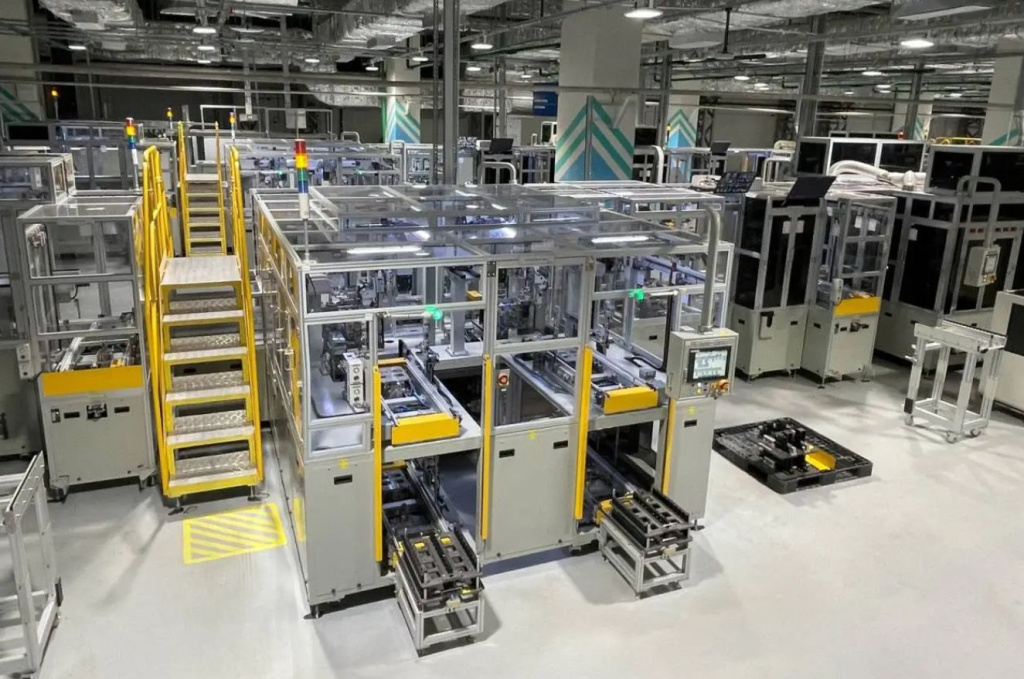
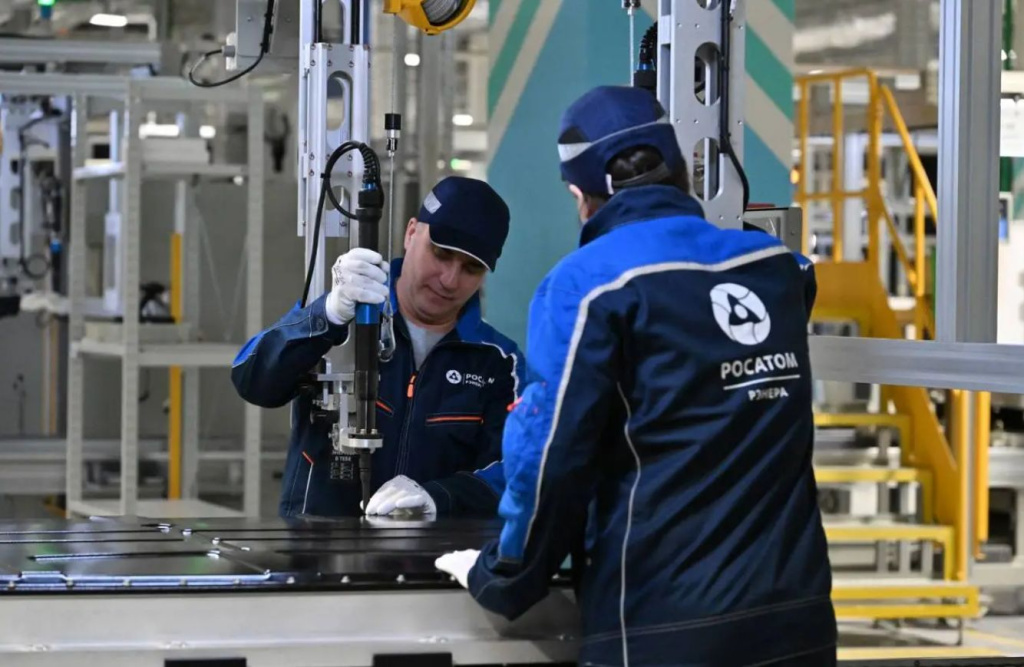
The batteries produced in the cluster can be used in electric vehicles, cargo and utility vehicles, robots, as well as in backup power systems for industrial facilities, civil engineering, data centers, hospitals, and charging infrastructure.
On the eve of Moscow Industry Day, which is celebrated on October 7, President of the Russian Federation Vladimir Putin (via videoconference) and Moscow Mayor Sergei Sobyanin opened the country's first Moscow cluster of electric batteries. Alexey Likhachev, CEO of Rosatom State Corporation, also took part in the opening ceremony.
"Technological leadership is impossible without the successful development of energy and the creation of modern energy-intensive storage devices. In this regard, I would like to draw the special attention of state corporations, large and small technology companies, and start—ups to the need for continuous improvement of technologies in this area, and the widespread introduction of new promising developments into practice," Vladimir Putin stressed.
The largest production of electricity storage systems in Russia is being formed in the Technopolis Moscow SEZ on an area of over 34 hectares. By 2030, it will cover almost 70 percent of the domestic market's demand for modern rechargeable batteries.
"250 high-tech enterprises have already been created in Moscow within the framework of the special economic zone, many of which we opened together. A new cluster is opening today. The cluster of electric batteries is the largest in the country and one of the most modern in the world. It consists of two gigafactories," Sergei Sobyanin said.
The first enterprise opens today — the Renera gigafactory for the production of traction batteries. In the coming months, it is planned to launch a second production of lithium-ion batteries designed for personal mobility devices and energy storage systems. The creation of the Moscow Electric Battery Cluster is part of a major effort to ensure the country's technological sovereignty, which the Moscow Government is conducting on behalf of Russian President Vladimir Putin.
Today, about 35 percent of the cost of electric vehicles is accounted for by a traction battery. Localization of the production of such batteries in Moscow will reduce the cost of the machines and thereby increase the economic attractiveness of their use. In turn, this will stimulate the expansion of domestic production of electric vehicles and will have a positive impact on the environmental situation.
The expansion of lithium-ion battery production will also contribute to increasing the export potential of the economy and the development of new technologies in related fields, including in the field of microprocessor technology, the chemical industry, the manufacture of high-tech materials, electronics, communication systems, transport and space technologies.
After reaching the design capacity, the two innovative plants will be able to produce up to 33 million battery cells per year. The total production area will be approximately 200 thousand square meters. More than 2.1 thousand high-tech jobs will be created at the enterprises.
The batteries produced in the cluster can be used in electric vehicles, electric buses, trams, river vessels, cargo and utility equipment, robots, as well as in backup power systems for industrial facilities, civil engineering, data centers, hospitals, and charging infrastructure.
At the same time, the Moscow cluster of electric batteries was formed taking into account the full life cycle of batteries. For example, when the battery has completed its service life in an electric bus, it can be used as an energy storage device at urban land transport stops. In addition, their further disposal is envisaged: lithium, cobalt and nickel will be extracted from spent batteries.
"By the end of 2027, together with the Russian Government and Rosatom State Corporation, the first Russian center for testing and certification of full-cycle energy storage systems will be established on the basis of the cluster. It will save domestic manufacturers from having to go through the appropriate procedures abroad," Sergei Sobyanin said.
28 testing methods and about 120 types of tests will be available here, from energy performance testing to thermal acceleration. The area of the center will be five thousand square meters. 55 units of high-tech equipment will be purchased to equip it.
High-tech production of traction batteries
In September 2023, between the State Unitary Enterprise Mosgortrans and Renera LLC (Rosatom State Corporation) A contract was signed for the supply of traction batteries, providing for the supplier's counter-investment obligations to create, modernize and develop their production in the capital.
As part of the agreement, the Moscow Government guarantees the purchase of traction batteries for electric buses, trams, Moskvich cars and river electric vessels for six years. The city has also committed itself to the construction of production buildings, technological connections and the creation of related infrastructure.
"Moscow is one of the main consumers of traction batteries. These are electric buses, electric cars, electric ships, and soon, perhaps, metro trains, trams, and so on. That is, it is a fairly large market. Today, the cost of a car, an electric car, and an electric car is up to 40 percent of the cost of an electric battery. And it includes about half the cost of a battery — it's a software product and chips. And it's all imported. Therefore, without a modern domestic battery, it is simply not necessary to talk about some kind of technological sovereignty," Sergei Sobyanin noted.
For its part, Rosatom has equipped the plant with modern equipment and, together with the Moscow Government, ensured its launch in October 2026.
Before the launch of production, full-scale fire tests were conducted jointly with the Russian Ministry of Emergency Situations. As a result, the country's first special technical conditions for fire safety of such plants were developed. They are now applicable all over the country.
The new plant in Moscow has become Russia's first gigafactory for the production of lithium-ion cells, modules, traction batteries and stationary energy storage systems. For the construction of the enterprise, the Moscow Government provided a land plot of 20.3 hectares. 1.3 thousand jobs have been created in the production area of 133.7 thousand square meters.
During the construction of the high-tech enterprise, 120 kilometers of power supply lines and 83 kilometers of networks were laid, the terrain with a height difference of more than 30 meters and karst voids was adapted, ISO—7 class clean rooms with an area of 29 thousand square meters were created — the largest in the country and one of the largest in the world - and two independent cooling systems.
The capacity of the new high—tech plant makes it possible to produce 18 million battery cells (50,000 batteries) per year for electric vehicles, including taxis, carsharing and personal transport, as well as electric buses, trams (providing autonomous driving), river electric vessels and means of individual mobility - electric bicycles, electric scooters, electric scooters and others.
"One cell per second is the performance of this line. 18 million cells per year. Up to 50,000, say, electric vehicles can be equipped with batteries within a year. This is, of course, a significant part of the market, and it is closed only by this platform. There is a very high degree of robotization here, 95 percent. But still, our main value is people, professionals who will develop this technology," said Alexey Likhachev, CEO of the state corporation Rosatom.
According to experts, thanks to the use of the latest technologies, the base capacity of the batteries produced will be higher than that used today. For electric buses, it will increase by 30 percent, and the estimated autonomous travel will increase by 50 kilometers to 180 kilometers. For the Moskvich electric car, the battery capacity will increase by 26 percent, and the estimated autonomous travel will increase by more than 105 kilometers and reach 515 kilometers.
At the same time, as the battery capacity increases, its mass will remain unchanged or even decrease, and the charging speed will increase by more than 10-15 percent.
In the future, the plant's products are planned to be used for the production of uninterruptible power supply units, electric charging stations, emergency power supply systems for industrial, social and strategic facilities, as well as for energy storage from renewable sources such as wind generators and solar panels. In addition, in the future, it is planned to switch trains to batteries on several metro lines, partially removing the contact rail from the tunnels and leaving charging only at the station during boarding and disembarking passengers.
In terms of equipment and automation, the company is one of the most modern and environmentally friendly in the world. The new full—cycle plant has installed over 1,400 units of high-tech equipment, including more than 450 robots that ensure the completion of all production stages - from the preparation of the cathode and anode mixture, electrolyte and applying materials to the electrode tape to the formation of a module of cells and battery. The automation level reaches 95 percent, and the total length of the production lines is 2.5 kilometers.
The company's work fully complies with the highest standards of respect for the environment. Waste-free production using automated high-tech equipment will avoid harmful emissions into the atmosphere.
"The gigafactory is ready to be put into commercial operation. The main technological equipment has been comprehensively tested. Engineering systems provide target parameters based on environmental characteristics," said Anastasia Mikhailova, CEO of Renera.
In addition, by the end of this year, the company will launch a high-tech R&D center for the production of modern batteries. It will attract young specialists, students and graduates of leading universities, including Bauman Moscow State Technical University, Lomonosov Moscow State University and others, to conduct scientific and applied research. This will allow us to train personnel for a fast-growing industry and conduct our own developments, which will be immediately implemented in production.
Lithium-ion Battery Manufacturing Plant
For the construction of the second enterprise, Inesis, a high—tech lithium—ion battery manufacturing plant, the Moscow Government has provided a 14-hectare plot of land, and has also committed to erecting a 63.1 thousand square meter production building, which will create over 840 jobs.
The capacity of the new plant will allow producing about 15 million cells per year designed for personal mobility equipment (electric bicycles, electric scooters, electric scooters, and others), as well as for special equipment, stationary and mobile energy storage systems, robotic complexes, and other devices.
The company plans to manufacture six types of battery cells simultaneously — batch (spider) and prismatic form factors. The production is also designed taking into account the possibility of simultaneously producing LFP (lithium-iron-phosphate), NMC (nickel-manganese-cobalt) and sodium ion cells in the future.
The automation level will reach almost 100 percent, and the total length of the production lines will exceed two kilometers.
The construction of the main production building has already been fully completed, and preparations are underway to launch production.
Technopolis Moscow SEZ
Technopolis Moscow Special Economic Zone is a territory with a special legal status, which has a preferential business regime for investors. It was established in 2006, but its active development began after the transfer of the project to the Moscow Government in September 2016. Over the past 10 years, Technopolis Moscow SEZ has become the largest in Russia both in terms of investments and operating areas.
SEZ residents are exempt from property, transport and land taxes for 10 years from the date of obtaining resident status. The income tax rate for them is two percent. There is a free customs zone regime and land lease benefits.
Today, more than 250 high-tech enterprises are located in the Technopolis Moscow SEZ, of which 131 have resident status, and more than 34,000 jobs have been created. In addition, there are clusters of photonics and microelectronics, pharmaceutical, electric vehicle, elevator and vertical transport.
The area of 10 sites hosting high-tech enterprises of the SEZ exceeds 430 hectares. Over 2.4 million square meters of industrial, public and business space have already been built in the SEZ. By 2030, it is planned to increase them by almost 2.5 times to 5.7 million square meters.
Moscow Industry
Moscow is the largest industrial, scientific and engineering center in Russia. There are 4,735 industrial enterprises in the city, employing 767,000 people — almost one in ten employed in the capital's economy.
The status of the main industrial and scientific center of the country defines the unique role of Moscow as a place of concentration of development and production of high-tech solutions in demand throughout Russia. It is here that key competencies in the fields of microelectronics, pharmaceuticals, power electronics and radioelectronic engineering are formed, which set the vector of development for the whole country.
In 2025, the revenue of all industrial enterprises in Moscow increased by 24 percent compared to the previous year, reaching 5.1 trillion rubles. The enterprises have allocated about 375 billion rubles of tax deductions to the city budget. This is 5.6 percent higher than in 2024.
The key trend in the development of the Moscow industry in recent years has been the growth of high—tech sectors. If in 2020 their share in the total revenue of industrial enterprises was 30 percent, then in 2026 it was already almost 40 percent. By 2030, in fact, half of everything the capital produces will be directly related to innovation and advanced technologies. The number of people employed in industry should be about 850 thousand people.
Today, the volume of industrial space in Moscow exceeds 13 million square meters, and by 2030 the city plans to increase its modern high—tech infrastructure, doubling its current level to 25 million square meters.
Since the end of 2025, the volume of industrial space in Moscow has already increased by 0.7 million square meters — from 13.1 to 13.8 million square meters, of which 0.3 million square meters were provided by the Technopolis Moscow special economic zone. Today, the main industrial site occupies 2.4 million square meters. Another 0.4 million square meters were commissioned in the capital thanks to projects by private investors implemented with the support of the city.
The development of industry in Moscow is inextricably linked with the environmental agenda. New production facilities introduce modern green technologies, use energy-efficient solutions and closed-loop principles, thereby minimizing the impact on the environment and ensuring the preservation of a comfortable urban environment.
Most of the new industrial infrastructure today is also built on the principle of vertical integration, which makes it possible to compactly place production, comfortable office spaces, scientific laboratories and recreation areas for employees, including cafes, restaurants and sports facilities, on one territory.
On the portal mos.ru A large-scale special project dedicated to the development of key areas of Moscow is presented. These include transport, industry, healthcare, education, sports, and construction. The special project helps to find out how the capital has changed in recent years, what initiatives are currently being implemented to make the lives of citizens even more comfortable, and what awaits Moscow and its residents in the near future.
On the Economics project page, you can learn about the main indicators of the capital's economic growth, its drivers and prospects, as well as what indicators can be achieved this year.
Press Service of Technopolis Moscow SEZ
+7 495 647 08 18 (ext. 1209) pr@technomoscow.ruFollow Technopolis Moscow SEZ on social media, stay updated with the main SEZ news on our Telegram channel, and receive all important updates directly to your inbox via our weekly newsletter.


